

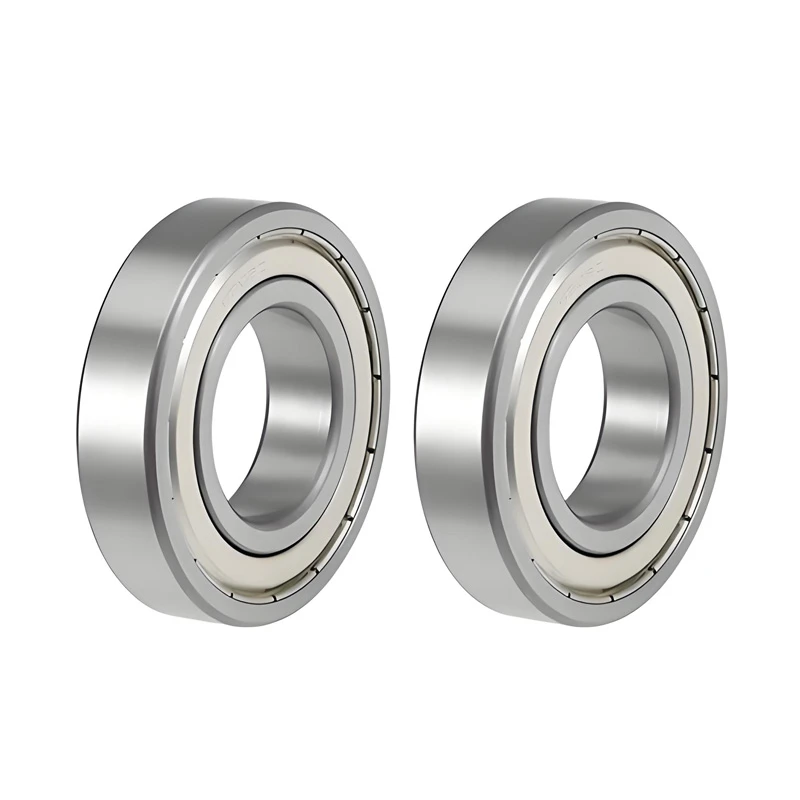
In industrial transmission systems, on what components does the stable operation of various motors and reducers rely for precise coordination? It's bearings. And which bearing has become the "reliable foundation" of industrial transmission systems due to its good radial load - bearing capacity and structural versatility? It is the carbon steel deep groove ball bearing. From the motors of conveying equipment in factory workshops to the transmission mechanisms of small reducers, how does it ensure efficient and stable power transmission in the transmission system? The answer lies in its adaptability to different speed and load requirements.
How do carbon steel deep groove ball bearings play a core role in the belt - driven motors of automated production lines? When the motor is in operation, it needs to drive the belt to continuously convey materials. The carbon steel deep groove ball bearings can smoothly transmit radial loads at the rated speed of the motor, reducing the vibration and noise during the motor's operation, and preventing the conveyor belt from deviating due to excessive vibration, thus ensuring the orderly operation of the production line. In small gear reducers, how do carbon steel deep groove ball bearings work in tandem with the gear sets? Its deep groove structure can withstand both radial and axial loads to a certain extent, adapting to the load changes during the start - stop of the reducer, ensuring smooth power transmission from the motor to the output shaft.
In addition, why can carbon steel deep groove ball bearings facilitate the daily maintenance of industrial equipment? Because of their simple structure, they are easy to install and maintain. When the equipment needs maintenance, the staff can quickly disassemble and replace them, reducing equipment downtime and improving production efficiency. Against the backdrop of the increasing requirements for equipment reliability and economy in industrial production, aren't carbon steel deep groove ball bearings an indispensable key component in industrial transmission systems, helping to promote efficient industrial production?


