

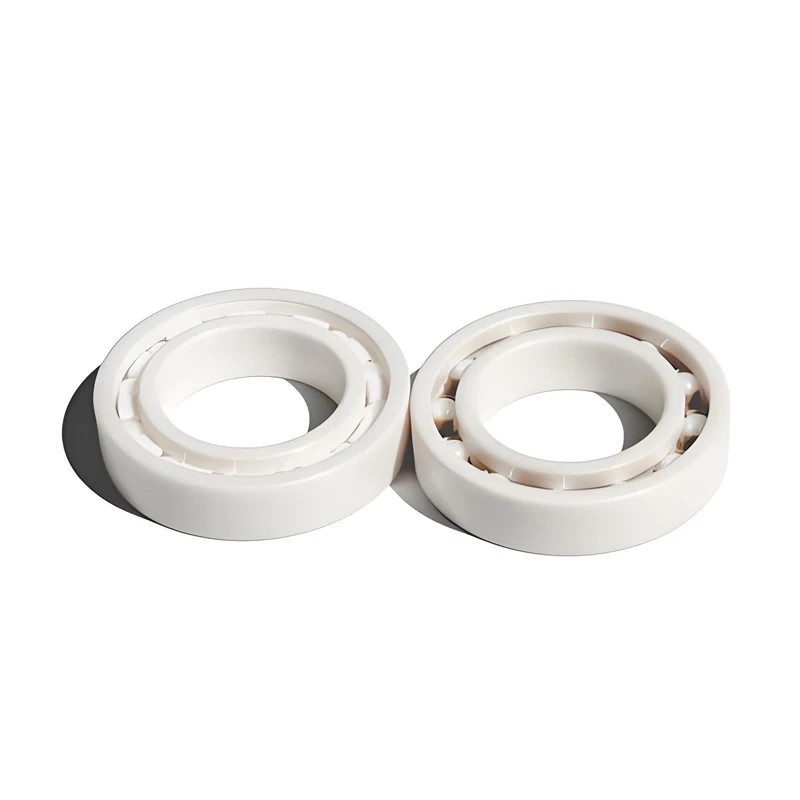
In the field of precision mechanical components, which type of bearing stands out under special working conditions? The answer is micro ceramic bearings. With their unique material composition, they have gradually become an important choice for many special working conditions. The rolling elements and inner/outer rings of these bearings are mostly made of ceramic materials such as zirconia and silicon nitride. So, compared with traditional metal bearings, what differentiated advantages do the material characteristics of micro ceramic bearings endow them with?
One of the most remarkable characteristics of micro ceramic bearings is their excellent high-temperature resistance. Ceramic materials themselves have high melting points and thermal stability. Imagine, in a high-temperature environment, traditional metal bearings are prone to stalling due to thermal expansion. Why can micro ceramic bearings remain stable? Precisely because they are not prone to deformation or performance degradation, enabling them to be suitable for equipment that needs to operate under high-temperature conditions, such as ovens and high-temperature sensors. Additionally, why are micro ceramic bearings highly favored in equipment with lightweight design requirements, such as drones and micro robots? This is due to the low-density characteristic of ceramic materials, which can not only significantly reduce the overall weight of the bearings, decrease the load on the fuselage, but also reduce energy consumption and improve the endurance of the equipment.
Why is corrosion resistance also a prominent advantage of micro ceramic bearings? Because ceramic materials have stable chemical properties and are not prone to reactions with corrosive media such as acid-base solutions and organic solvents. In complex environments such as chemical production equipment and marine exploration instruments, metal bearings often have a shortened lifespan due to corrosion. Why can micro ceramic bearings maintain stable operation for a long time? The secret lies in their excellent corrosion resistance. Moreover, when micro ceramic bearings are used with special lubricants, why is the wear rate much lower than that of metal bearings? This is because ceramic materials have a low friction coefficient. This characteristic not only extends the service life of the bearings themselves but also reduces the maintenance costs and downtime of equipment caused by component wear.
In scenarios with electric field interference, such as motors and high-voltage equipment, why can micro ceramic bearings ensure the electrical safety and operational stability of the equipment? In terms of insulation performance, the non-conductive nature of ceramic materials can effectively prevent the occurrence of electrical erosion caused by current passing through the bearings. Considering these characteristics, the application potential of micro ceramic bearings in the field of precision manufacturing is constantly being explored. So, with the upgrading of ceramic material processing technology, how will their performance be further optimized? In the future, they will surely provide reliable transmission support for more equipment under special working conditions.


