

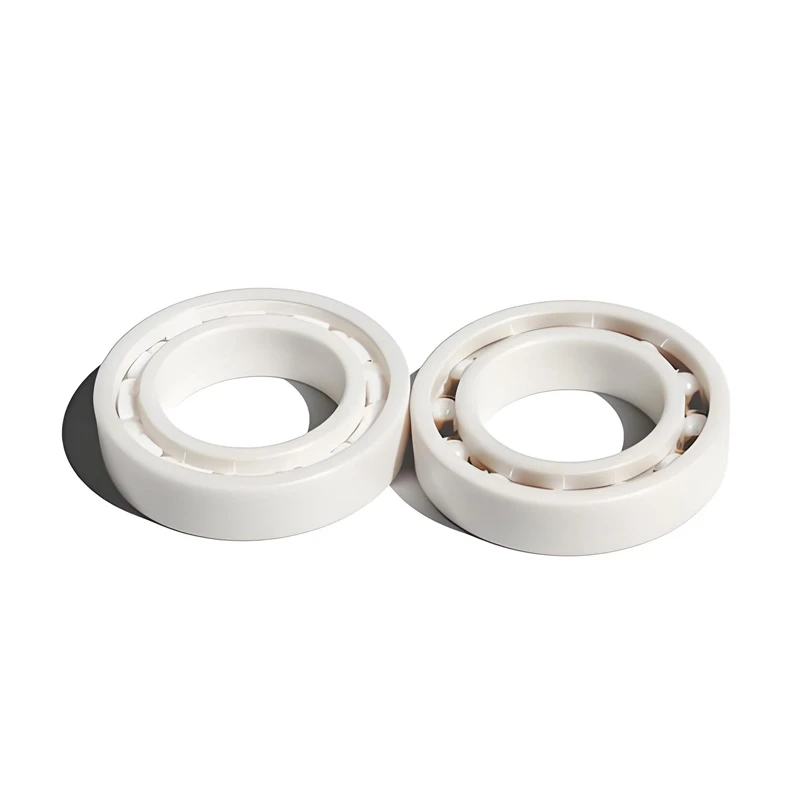
With the development of industrial equipment towards miniaturization and high precision, miniature ceramic bearings have been widely used in many industries due to their ability to adapt to special working conditions, becoming key components that support the stable operation of equipment. So, what are the requirements of different fields for miniature ceramic bearings? How do their performance advantages be fully utilized in these fields?
In the medical device field, how important is the application of miniature ceramic bearings? Take dental handpieces and minimally invasive surgical instruments as examples. These devices need to achieve high - speed rotation in a confined space, and at the same time, have extremely high requirements for cleanliness and corrosion resistance. Can miniature ceramic bearings meet these requirements? The answer is yes. They can not only withstand the centrifugal force caused by high - speed operation, but their corrosion resistance also enables them to adapt to high - temperature and high - pressure disinfection processes, avoiding component damage during disinfection. In addition, what benefits can the characteristic of no metal ion precipitation of ceramic materials bring to patients? It can ensure the safety of patients and effectively reduce the risk of cross - infection. In precision diagnostic equipment such as blood glucose monitors and blood analyzers, why is the low - wear characteristic of miniature ceramic bearings crucial? Because this characteristic can ensure that the equipment maintains stable detection accuracy for a long time and reduce errors caused by component wear.
The aerospace field has extremely strict requirements for the reliability and environmental adaptability of components. What advantages can miniature ceramic bearings offer in this field? In equipment such as satellite attitude control systems and micro - thrusters, the space environment features extreme temperature differences and strong radiation. Can miniature ceramic bearings operate normally? Thanks to their high - temperature and low - temperature resistance, they can operate normally within a temperature range of - 200°C to 600°C and are not affected by the radiation environment. What is the role of their lightweight characteristic? It can reduce the overall weight of satellites and other spacecraft, thereby reducing launch costs. And what does a low friction coefficient mean for spacecraft? It means that it can improve the energy utilization efficiency of the equipment and extend the on - orbit working time of the spacecraft.
In the field of high - end consumer electronics, where are miniature ceramic bearings applied? In the tourbillon mechanism of smartwatches and the lens drive components of micro - projectors, how do the miniaturized design and low - noise characteristics of miniature ceramic bearings meet the requirements of the equipment? They can meet the space and silence requirements of the equipment, ensuring that no obvious noise is generated during component operation, thus enhancing the user experience. What benefits can their wear - resistant performance bring to consumer electronics products? It can extend the service life of the products and reduce the maintenance frequency for users.
It can be seen that miniature ceramic bearings have been deeply integrated into many fields. So, with the continuous development of technology, how will their application scenarios expand? This is something worthy of our continuous attention.


