


The turning of a bearing is a critical aspect in numerous industrial applications. As a supplier of high - quality bearings, understanding the factors that affect the turning of the bearing is of utmost importance for us to provide the best products and services to our customers. In this blog, we will delve into the key factors that can influence the turning of a bearing.
1. Lubrication
Lubrication is perhaps the most crucial factor affecting the turning of a bearing. A proper lubricant can reduce friction between the moving parts of the bearing, which in turn minimizes wear and tear, heat generation, and noise. When a bearing is well - lubricated, the rolling elements can move smoothly, ensuring efficient turning.

There are different types of lubricants available, such as grease and oil. Grease is a semi - solid lubricant that is easy to use and can provide long - term lubrication. It is suitable for applications where the bearing operates at relatively low speeds and has a sealed environment. On the other hand, oil lubrication is more effective for high - speed applications as it can dissipate heat more efficiently. The viscosity of the lubricant also plays a vital role. If the viscosity is too high, it can cause excessive drag on the bearing, reducing its turning efficiency. Conversely, if the viscosity is too low, it may not provide sufficient lubrication, leading to increased friction and wear.
For example, in Heat Buster Fan Bearings, proper lubrication is essential to ensure the smooth operation of the fan. The high - speed rotation of the fan requires a lubricant with appropriate viscosity and good heat - dissipation properties to prevent overheating and premature failure of the bearing.
2. Load
The load applied to a bearing has a significant impact on its turning. There are two main types of loads: radial load and axial load. Radial load acts perpendicular to the axis of the bearing, while axial load acts parallel to the axis.
When a bearing is subjected to a high radial load, the rolling elements and the raceways experience increased stress. This can cause deformation of the raceways and the rolling elements, leading to uneven turning and increased friction. Similarly, excessive axial load can also affect the alignment of the bearing and cause it to wear out more quickly.
In applications like Rolling Mill Bearings, the bearings are exposed to extremely high radial and axial loads. The design of these bearings must be able to withstand these heavy loads to ensure smooth turning and long - term operation. If the load exceeds the bearing's rated capacity, it can lead to catastrophic failure, such as cracking of the raceways or breakage of the rolling elements.
3. Speed
The speed at which a bearing operates is another important factor. High - speed operation can generate a significant amount of heat due to friction. If the heat is not dissipated properly, it can cause the lubricant to break down, leading to increased friction and wear. Moreover, at high speeds, the centrifugal force acting on the rolling elements can cause them to move out of their normal paths, affecting the turning stability of the bearing.
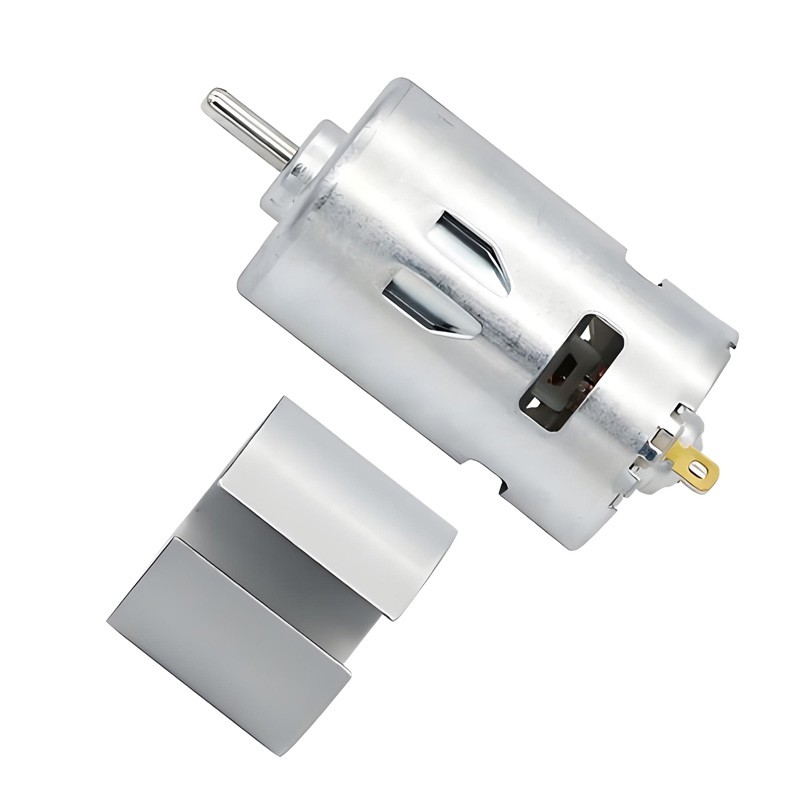
For instance, in 12v Dc Motor Bearings, the bearings need to operate at relatively high speeds. Special design considerations, such as using high - quality materials and advanced lubrication systems, are required to ensure that the bearings can handle the high - speed operation without compromising their turning performance.
4. Contamination
Contamination can have a detrimental effect on the turning of a bearing. Dust, dirt, water, and other foreign particles can enter the bearing and cause abrasion of the rolling elements and the raceways. This can lead to increased friction, noise, and vibration, and ultimately, premature failure of the bearing.
In industrial environments, bearings are often exposed to various contaminants. For example, in a manufacturing plant, metal chips and dust can easily enter the bearings. In a marine environment, water and salt can cause corrosion of the bearing components. To prevent contamination, proper sealing systems are essential. Seals can prevent the entry of foreign particles and retain the lubricant inside the bearing.
5. Material and Manufacturing Quality
The material used to manufacture the bearing and the quality of the manufacturing process also play a crucial role in its turning performance. High - quality bearing materials, such as high - carbon chromium steel, can provide better hardness, toughness, and wear resistance.
The manufacturing process, including machining, heat treatment, and surface finishing, must be carefully controlled to ensure the dimensional accuracy and surface quality of the bearing components. Any defects in the manufacturing process, such as uneven surfaces or improper heat treatment, can affect the turning of the bearing. For example, if the raceways are not machined to the correct dimensions, the rolling elements may not roll smoothly, leading to increased friction and noise.
6. Misalignment
Misalignment of a bearing can occur due to improper installation or external factors. When a bearing is misaligned, the rolling elements do not roll along the intended paths on the raceways. This can cause uneven loading on the bearing, increased friction, and premature wear.
There are two main types of misalignment: angular misalignment and parallel misalignment. Angular misalignment occurs when the axes of the inner and outer rings of the bearing are not parallel, while parallel misalignment occurs when the axes are parallel but offset. In both cases, the turning performance of the bearing is severely affected.
7. Temperature
Temperature can significantly affect the turning of a bearing. High temperatures can cause the expansion of the bearing components, which can change the internal clearances of the bearing. If the internal clearances become too small, it can lead to increased friction and overheating. On the other hand, low temperatures can make the lubricant more viscous, reducing its lubricating ability.
In some applications, such as in high - temperature furnaces or cold storage facilities, the bearings need to be designed to withstand extreme temperature conditions. Special materials and lubricants are used to ensure that the bearings can operate smoothly at different temperatures.
As a bearing supplier, we understand the importance of these factors in ensuring the optimal turning performance of bearings. We are committed to providing our customers with high - quality bearings that are designed and manufactured to meet the specific requirements of their applications. Whether you need Heat Buster Fan Bearings, Rolling Mill Bearings, or 12v Dc Motor Bearings, we have the expertise and resources to offer you the best solutions.
If you are interested in our bearing products and would like to discuss your specific needs, we encourage you to contact us for procurement and further洽谈. Our team of experts is ready to assist you in finding the most suitable bearings for your applications.
References
- Harris, T. A., & Kotzalas, M. N. (2007). Rolling Bearing Analysis. John Wiley & Sons.
- Kragelsky, I. V., Dobychin, M. N., & Kombalov, V. S. (1982). Wear and Friction. Pergamon Press.
- Zorzi, C., & Fregolent, A. (2013). Tribology of Rolling Element Bearings. Springer.


